Best Laptops Under $5000 for AI Developers and Video Creators
The best single-machine choice is no longer simply the most expensive mobile workstation. For local AI development, VRAM, CUDA support, unified memory, thermals, Linux/WSL practicality, and storage matter. For video work, encoder generation, display quality, color coverage, timeline responsiveness, and SD/Thunderbolt workflows matter. This report ranks the top 10 sub-$5000 choices across both worlds.
Executive Summary
If you want the strongest overall sub-$5000 machine for both AI development and video creation, choose a high-power RTX 5090 laptop with 24GB GDDR7 and a strong cooling system. If you prioritize Final Cut, battery life, and Apple-native video pipelines, choose MacBook Pro M5 Max. If your local AI work needs very large models more than CUDA speed, the AMD Ryzen AI Max systems with 128GB unified memory deserve serious attention.
Visual Analytics
Scores weight AI developer workloads at 40%, video content creation at 30%, price/value at 15%, portability/build at 10%, and source confidence at 5%.
Verified RTX 5090, 24GB VRAM, 64GB RAM, 4TB SSD, and a live $4,299.99 price.
Razer Blade 18 and Alienware 18 Area-51 emphasize 18-inch cooling, high TGP, and expandable storage.
ASUS ProArt P16 combines RTX 5090, 4K 120Hz OLED, 100% DCI-P3, Delta E under 1, and SD Express.
HP ZBook Ultra G1a and ProArt PX13 can allocate large memory to GPU-like workloads, but lack CUDA.
Top 10 Comparison Matrix
Prices are U.S. public web prices or configuration indications observed during research. For systems with live configurators, stay under $5000 by avoiding warranty bundles, max storage, or very high RAM upgrades unless noted.
| Rank | Laptop | Best Sub-$5000 Config | AI Developer Fit | Video Creation Fit | Tradeoffs | Score | Confidence |
|---|---|---|---|---|---|---|---|
| 1 | Acer Predator Helios 18 AI PH18-73-96CE Best overall valueRTX 5090 | Intel Core Ultra 9 275HX, RTX 5090 24GB GDDR7, 64GB DDR5, 4TB PCIe NVMe, 18-inch 3840x2400 display. Verified sale price $4,299.99. | Best mix of verified price, VRAM, RAM, storage, and CUDA. Strong for local inference, LoRA experiments, ComfyUI, CUDA/PyTorch, and WSL/Linux workflows. | 4K-class 18-inch canvas, 24GB VRAM, fast storage, and NVIDIA encoders make it excellent for 4K/8K timelines and AI effects. | Large and heavy at about 7.72 lb. IPS/mini-LED variants are practical, but not as creator-polished as ProArt OLED. | 97 | High Live Acer store price/specs plus NVIDIA platform data. |
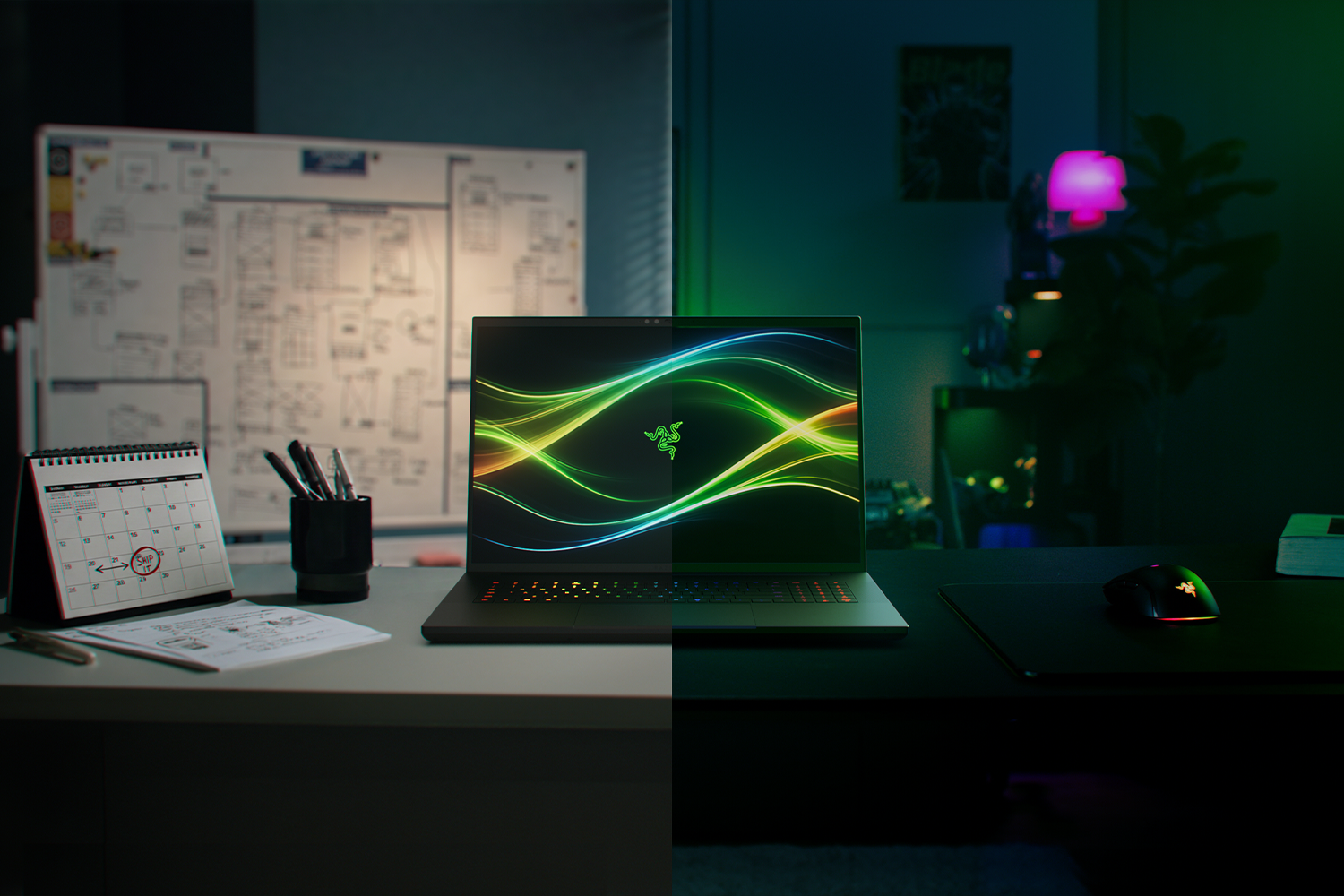
| 2 | Razer Blade 18 2026 Best premium AI desktop replacementRTX 5090 | Intel Core Ultra 9 290HX Plus, RTX 5090 24GB option, 32GB RAM/1TB SSD stays at about $4,899.99 by adding RTX 5090 to the $3,999.99 base; RAM/storage upgrades push above $5000. | Excellent for AI dev: 175W RTX 5090, Linux compatibility note, local AI model support, dual M.2 storage, and full-size development ergonomics. | Dual-mode 18-inch UHD+ 240Hz/FHD+ 440Hz display, 100% DCI-P3, Calman verification, SD reader, and strong NVENC path. | Under-$5000 config sacrifices RAM and storage; 64GB/128GB upgrades are expensive. Premium tax is real. | 95 | High Razer product and buy pages expose current options and pricing. |
| 3 | ASUS ROG Strix SCAR 18 2025 Best raw sustained powerRTX 5090 | Core Ultra 9 275HX, RTX 5090 24GB, up to 64GB DDR5, up to 4TB SSD RAID 0, 18-inch Mini LED Nebula HDR. Typical 5090 configs are near the $5000 ceiling. | Outstanding sustained CUDA performance: 175W GPU, 1824 AI TOPS, tool-less RAM/SSD access, strong cooling, and Thunderbolt 5. | Mini LED, 100% DCI-P3, Pantone validation, Dolby Vision, and strong thermals for long renders. | Price varies by retailer and region; not the most portable or quiet choice. | 94 | Medium-high Specs verified by ASUS; price under $5000 depends on retailer/config. |
| 4 | Alienware 18 Area-51 RTX 5090Best expandable gaming workstation | Starts at $3,799.99; configurable up to Core Ultra 9 290HX, RTX 5090, 64GB RAM, and 12TB storage. RTX 5090 configs can remain under $5000 if storage is kept sane. | Strong local AI workstation if configured with RTX 5090. 18-inch cooling, dual Thunderbolt 5, and high total performance power favor sustained loads. | Large chassis, strong thermals, and big display are useful for editing, encoding, and review work. | Exact RTX 5090 checkout price was not exposed in fetched content. Less creator-specific display evidence than ASUS ProArt/Razer. | 92 | Medium Dell comparison page verifies starts/config ceiling; exact selected price needs cart check. |
| 5 | ASUS ProArt P16 H7606 Best creator-first Windows laptopRTX 5090 | Ryzen AI 9 HX 370, RTX 5090 24GB, up to 64GB LPDDR5X, up to 4TB SSD, 16-inch 4K Lumina Pro OLED, SD Express 7.0. | Excellent for CUDA AI apps and model inference, though lower total power than large 18-inch gaming workstations. | Best color/storytelling package: 4K OLED, 100% DCI-P3, Delta E under 1, 1600-nit HDR peak, 10-bit 4:2:2 support, AI creator apps, and SD Express. | Thermal envelope is lower than SCAR/Helios/Razer 18. ASUS does not publish a stable direct U.S. price on the fetched page. | 92 | Medium-high Specs are strong and current; price confidence is lower. |
| 6 | Razer Blade 16 2025 RTX 5090Best portable premium CUDA pick | AMD Ryzen AI 9 or Intel Core Ultra option, RTX 5090 24GB, QHD+ 240Hz OLED. Razer lists a Blade 16 RTX 5090 SKU at $4,899.99. | Best pick when you need RTX 5090 CUDA in a thinner 16-inch body. Good for travel-heavy AI prototyping. | OLED display and NVIDIA Studio path are excellent for creators; strong for Resolve/Premiere AI effects and GPU exports. | Thin chassis limits sustained power versus 18-inch systems. Configurator pricing suggests memory/storage upgrades can exceed $5000 fast. | 91 | High Razer buy page verifies RTX 5090 option and $4,899.99 SKU mention. |
| 7 | Alienware 16 Area-51 RTX 5090High power 16-inch | Starts at $2,379.99; configurable up to Core Ultra 9 290HX, RTX 5090, 64GB RAM, and 12TB storage. | Very strong if configured with RTX 5090 and 64GB RAM. Better desk replacement than an ultrathin 16-inch machine. | OLED option, high total gaming power, and Dell/Alienware thermals make it a capable video workstation. | Exact sub-$5000 RTX 5090 build not verified in fetched content. Heavier and less creator-focused than ProArt P16. | 90 | Medium Dell verifies starting price and max configuration, not exact cart price. |
| 8 | Apple MacBook Pro 16-inch M5 Max Best Mac video systemNo CUDA | 16-inch MacBook Pro starts at $2,699 and offers M5 Max, up to 128GB unified memory, and 1TB-8TB SSD. Stay under $5000 by choosing a moderate M5 Max memory/storage config. | Excellent for Metal, MLX, Core ML, on-device AI demos, and large unified-memory experiments. Weak for CUDA-first AI stacks. | Excellent for Final Cut Pro, ProRes workflows, battery life, display quality, and quiet mobile editing. | No NVIDIA CUDA, no NVENC, and many PyTorch/LLM recipes still target CUDA first. High memory/storage upgrades can exceed $5000. | 88 | High Apple Store and specs pages are current for M5/M5 Max. |
| 9 | HP ZBook Ultra G1a 14 Best 128GB portable local LLM optionNo CUDA | AMD Ryzen AI Max+ PRO 395, Radeon integrated graphics, up to 128GB unified memory, up to 4TB SSD, ISV certification, sub-4 lb class. | Compelling for local LLMs that need memory capacity more than CUDA throughput. HP says up to 96GB can be assigned exclusively to GPU. | Portable workstation with ISV certification and OLED option; useful for 3D/video workflows where AMD acceleration is supported. | Not ideal for CUDA, TensorRT, or NVIDIA Studio workflows. Pricing was not available from the fetched HP product page. | 86 | Medium Specs verified; price and exact retail config need cart/reseller check. |
| 10 | ASUS ProArt PX13 HN7306 128GB unifiedConvertible | Ryzen AI Max+ 395, up to 128GB unified LPDDR5X, up to 1TB SSD, 13.3-inch 3K OLED touch, convertible pen-friendly chassis. | Excellent niche option for portable local model experiments using big unified memory. Better for inference/prototyping than heavy training. | Good for mobile creators needing sketching, on-location edits, 3K OLED, and ASUS creator apps. | Small screen, 1TB max storage in listed specs, no CUDA, and lower sustained performance than 16/18-inch workstations. | 84 | Medium-high ASUS verifies current 2026 specs; price confidence lower. |
Buying Recommendations
Choose the Razer Blade 18 if build quality, Thunderbolt 5, Linux friendliness, and a premium 18-inch desktop replacement matter more than RAM-per-dollar. Choose the ASUS ProArt P16 if color-critical video work is the priority and AI development is mostly inference, ComfyUI, Resolve/Premiere AI effects, and CUDA-accelerated creator tools. Choose MacBook Pro M5 Max only if your video stack is Apple-native or your AI work is comfortable with MLX/Metal instead of CUDA. Choose HP ZBook Ultra or ProArt PX13 when local model memory capacity matters more than NVIDIA acceleration.
Method and Limits
The scoring model favors practical AI developer work over benchmark theater. RTX 5090 laptops scored highest because 24GB GDDR7 VRAM, CUDA, Tensor cores, Studio drivers, and NVIDIA encoders directly map to local LLM inference, diffusion workflows, PyTorch, CUDA extensions, DaVinci Resolve, Adobe Premiere Pro, Blender, and OBS. Unified-memory systems scored well when they unlock larger local models, but they lose points for CUDA incompatibility. Prices change quickly; this report treats live vendor pricing as high confidence, vendor starting prices as medium confidence, and unstated reseller pricing as lower confidence.
References and Validation Notes
- NVIDIA GeForce RTX 50 Series Laptops - RTX 5090 laptop specs, 24GB GDDR7, 1,824 AI TOPS, 10,496 CUDA cores, 896 GB/s bandwidth, Studio tools, ninth-gen encoder, and AI development positioning.
- Acer Store Predator Helios 18 AI PH18-73-96CE - live $4,299.99 price, RTX 5090 24GB, 64GB RAM, 4TB SSD, Core Ultra 9 275HX, 18-inch 3840x2400 display.
- Acer Predator Helios 18 AI product page - RTX 5090, 175W MGP, Core Ultra 9, Mini LED/dual-mode display, Thunderbolt 5, Wi-Fi 7, and model list pricing.
- Razer Blade 18 product page - 2026 AI development positioning, RTX 5090 24GB, 175W TGP, Core Ultra 9 290HX Plus, 128GB RAM support, dual M.2, Linux note, and dual-mode display.
- Razer Blade 18 buy page - $3,999.99 base, RTX 5090 +$900 option, RAM/storage upgrade pricing, and current configurator details.
- Razer Blade 16 product page - RTX 5090 option, 240Hz OLED, thin chassis, creator/AI positioning.
- Razer Blade 16 buy page - RTX 5090 option and listed RTX 5090 SKU price of $4,899.99.
- ASUS ROG Strix SCAR 18 2025 - Core Ultra 9 275HX, RTX 5090 175W, 24GB GDDR7, 1,824 AI TOPS, Mini LED Nebula HDR, upgradable RAM/SSD, Thunderbolt 5.
- ASUS ProArt P16 H7606 - Ryzen AI 9 HX 370, RTX 5090 24GB, 4K 120Hz Lumina Pro OLED, 100% DCI-P3, Delta E under 1, SD Express 7.0, video editing and creator claims.
- ASUS ProArt PX13 HN7306 - Ryzen AI Max+ 395, 128GB unified memory, 3K OLED, convertible creator workflow details.
- HP ZBook Ultra G1a - Ryzen AI Max+ PRO 395, 128GB unified memory, up to 96GB assignable to GPU, ISV certification, AI workstation positioning.
- Dell Alienware laptops comparison - Alienware 16 and 18 Area-51 starting prices, RTX 5090 max configuration, memory/storage ceilings, Thunderbolt 5 and total power notes.
- Apple MacBook Pro technical specifications - current M5/M5 Pro/M5 Max specs, unified memory options, battery testing notes, and Apple Silicon generation.
- Apple 16-inch MacBook Pro buy page - current 16-inch M5 Pro/M5 Max pricing from $2,699 and up to 128GB unified memory.
- Apple 14-inch MacBook Pro buy page - current 14-inch pricing from $1,699 and M5/M5 Pro/M5 Max options.